
It’s an exciting time to watch how Canada is expanding its economic reach beyond just our southern neighbors. By opening stronger doors to Europe, we’re not only diversifying trade but also tapping into fresh opportunities in sectors like energy, AI, critical minerals, and infrastructure. As someone passionate about real estate and always seeking new ways to help my clients succeed, I see how these international partnerships could shape where investment—and growth—flows next. For Canadian businesses, investors, and even those of us in property, a broader network of trading partners could mean new avenues for development and opportunity. The next big chapter for Canada might just come from the relationships we build abroad, not just what happens across the border. I’m always focused on staying ahead so I can deliver the best advice and results for you.
Blog
-

National Day for Truth and Reconciliation
National Day for Truth and Reconciliation honours survivors and raises awareness about their experiences.
It's a symbol of Canada's commitment to reconciliation with Indigenous communities.
Wearing orange shirts on this day symbolizes respect for survivors and raises awareness about residential schools.
May this day inspire a future where every voice is heard, and every spirit is healed.
Together, we can create a tomorrow filled with hope and endless possibilities. -

Understand Your Property Tax Assessment and What It Means
Navigating your property tax assessment can feel overwhelming, but understanding how your home's value is determined is key to being an informed homeowner. Tax assessments are based on your property’s use, size, location, and current local rates, which all directly impact your tax bill. However, these assessments aren’t always up to date, and sometimes they don’t reflect the true value of your home. If you believe your assessment is inaccurate, you do have the option to appeal or explore available tax relief programs, depending on your eligibility. Part of my commitment to providing a hassle-free real estate experience is helping clients make sense of details like these. With a deep understanding of our local market, I’m here to ensure you’re confident every step of the way—whether you’re buying, selling, or just making sense of your current property’s value.
Continue to full article -

Your Complete Guide to Buying a Home
Navigating the path to homeownership can feel overwhelming, but with the right guidance, it becomes a truly rewarding experience. Over the years, I've found that breaking the process down into clear, manageable steps helps my clients move forward with confidence. Start by researching homes that fit your needs, set a realistic budget, and get pre-approved to strengthen your position. From there, we’ll shop for both homes and lenders, submit offers, arrange inspections, and move through closing. But it doesn’t stop at the keys—maintaining your new home and setting aside savings for repairs and retirement are just as essential. My commitment is to combine hands-on support and local expertise with genuine, old-fashioned customer service, ensuring each step is as smooth and stress-free as possible. Your trust means everything to me, and I’m here to help make your real estate journey a hassle-free success.
Continue to full article -

Canada’s Real Estate Recovery Takes Shape
We're seeing encouraging signs that Canada’s real estate market is finding its footing again, with sales picking up, inventory stabilizing, and early price gains showing up after what’s felt like a lengthy downturn. Looking ahead, projections for 2026 point to sales dipping about 4% to roughly 453,000 homes, and average reference prices easing by around 2% to about $794,000. By 2027, forecasts suggest a rebound: sales could rise by approximately 7% to 484,000 units, and benchmark prices might nudge up just under 1%, landing near $801,000 nationwide.
It’s worth noting, though, that this recovery isn’t playing out evenly everywhere. Ontario and British Columbia are still trailing, and the condo market in Toronto and Vancouver continues to feel the weight of higher supply. To me, this feels less like a classic boom and more like a careful transition from correction to recovery—a period where opportunities may open up for buyers as conditions slowly improve. As always, my commitment is to help clients navigate these shifts with clear guidance and trusted expertise, whether you’re buying, selling, or investing.
-
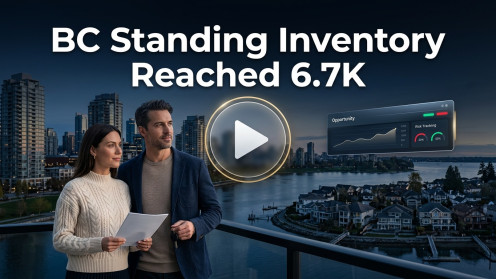
BC Standing Inventory Reached 6.7K
BC’s standing inventory has reached 6,700 homes, with 5,500 condos included in that total—spanning condos, townhomes, and some multiplex units all across the province. As someone who’s always tracking the numbers to help my clients make informed decisions, I find it interesting how inventory is spread out: Burnaby is currently leading with 1,210 unsold homes, followed by Vancouver at 1,020, Surrey at 798, and Coquitlam at 620. It’s not just the major centres—Richmond (396 units), Kelowna (372), Langley Township (276), New Westminster (224), and Delta (211) all show notable inventory. Even further afield, we’re seeing counts like Langford (188), Esquimalt (173), City of North Vancouver (135), Abbotsford (118), and Chilliwack (100), with these listed cities alone accounting for 5,840 homes.
There’s a common idea circulating that presale inventory is mostly studios and one-bedrooms, but when you look at the broader data on home size and average prices across BC, the story is more nuanced. My passion is helping buyers, sellers, and investors navigate these shifts with confidence, so you can make the choices that fit your needs—backed by solid local knowledge and a commitment to making the process smooth and stress-free.
-
Canada’s housing market ‘finally’ moving toward recovery this year: RBC
It’s encouraging to see signs that Canada’s housing market is finding its footing again this year. Recent trends show home resales on the rise, inventories stabilizing, and prices beginning to level out—indications that we’re moving toward a steadier marketplace. While RBC forecasts a modest 3.6% dip in resales for this year, they also predict a rebound with 6.7% growth next year, alongside slight price increases. With interest rates holding steady and some external uncertainty, it’s more important than ever to have a clear understanding of local market dynamics. My commitment to delivering results and my focus on client-first service means I’m always here to help you navigate these shifting trends, whether you’re buying, selling, or investing. Trust and expertise make all the difference in making your real estate experience smooth and hassle-free.
Continue to full article -

Canada’s Housing Recovery Won’t Be a Boom
There’s a lot of talk about recovery in Canada’s housing market, and it’s true—we’ve seen encouraging signs since early Q2. Resales are picking up, inventory is finding balance, and price declines are slowing down. Still, the latest forecasts from the bank remind us that a full-blown boom isn’t on the horizon just yet. Looking ahead, they expect 2026 home resales to dip by about 4% to 453,200, with benchmark prices easing roughly 2% to $794,200. By 2027, we should see some growth: resales could rise around 7% to 483,600, and benchmark values might edge up just under 1% to $800,700. These numbers suggest a recovery, but not a surge.
A major factor is the pent-up demand—the bank estimates more than 400,000 Canadian households haven’t formed since 2019, as many have waited to enter the market. The outlook still hinges on affordability, steady economic growth, and renewed confidence. With rates likely at their lowest and ongoing trade tensions, it’s clear that navigating this market takes careful planning and knowledge of local trends. As always, I’m committed to making your real estate experience smooth and stress-free, whether you’re buying your first home, selling, or investing. Trust and insight remain at the heart of what I do.
-

Mid-year outlook for Canada’s housing market: Between correction and recovery
The mid-year outlook for Canada’s housing market is starting to feel a bit more optimistic. As someone who’s passionate about real estate and committed to delivering measurable results for my clients, I’m encouraged to see signs of recovery heading into 2026—resales are picking up, inventory is stabilizing, and price declines are beginning to slow. While we can expect a modest rebound in 2027, it's important to stay mindful of ongoing challenges such as immigration cuts and higher interest rates. My focus has always been on guiding clients through every shift in the market and offering that good old-fashioned service you can rely on. Whether you’re buying, selling, or investing, having a trusted advisor by your side makes all the difference in navigating these changes smoothly.
Continue to full article -

What Is a Short Sale on a House? Process, Alternatives, and Mistakes to Avoid
Short sales are one of those unique paths in real estate that can make a big difference for both sellers and buyers when foreclosure seems like the only option. For homeowners, a short sale means selling the property for less than what’s owed on the mortgage, but it does require your lender’s sign-off and comes with a fair bit of paperwork and patience. The benefit? It generally impacts your credit less than a foreclosure would. For buyers and investors, short sales can offer an opportunity to purchase a home below market value, but it’s important to understand that these deals often have limited information about the property and may involve unexpected costs. Navigating these situations is a perfect example of why having a knowledgeable partner matters—I’m always here to help ensure the process runs smoothly, minimize hassles, and keep your best interests front and center. Real estate can be complicated, but with the right guidance, you can make informed, stress-free decisions.
Continue to full article